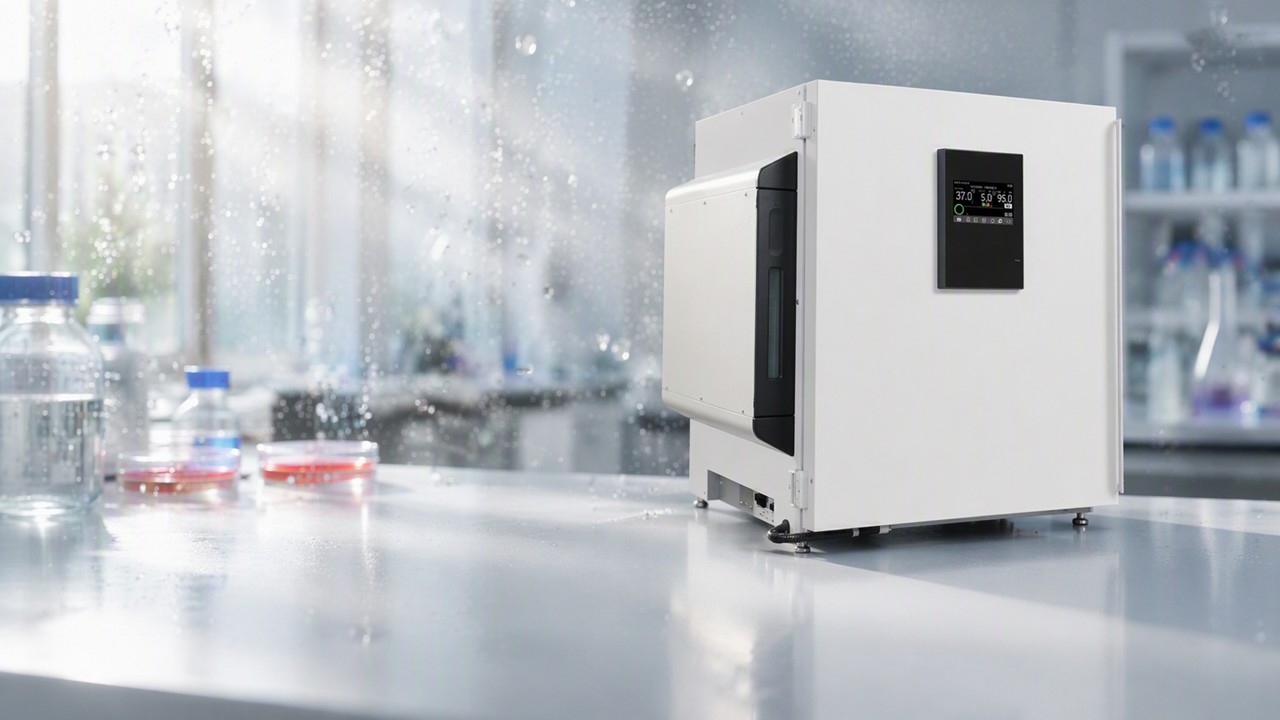
Controlled humidity is crucial for stable cultivation conditions and the reliable protection of sensitive samples. With the introduction of the new MCO-173AICUVHX-PE (165 L) and MCO-233AICUVHX-PE (230 L) IncuSafe CO₂ incubators, Panasonic leverages innovative technologies to effectively regulate humidity and ensure optimal cell culture conditions. The new models offer precise climate control and help laboratories efficiently overcome challenges posed by unwanted humidity fluctuations.
Challenge
In cell culture, temperature and CO₂ are often the focus of attention. However, one crucial factor is frequently underestimated: humidity. Yet it is essential for maintaining stable conditions and achieving reproducible results. Even small fluctuations in humidity can lead to evaporation of the culture medium. This alters the osmolarity, increases the concentration of salts, and directly affects cell growth as well as the comparability of results.
Additional challenges arise in everyday laboratory work, such as frequent opening of the incubator door. This disrupts the delicate balance inside the incubator and exposes cell cultures to unnecessary stress. As a result, humidity is not a secondary parameter, but a key factor in ensuring quality, efficiency, and reproducibility in modern cell culture processes.
New Solutions for Stable Cell Culture Conditions
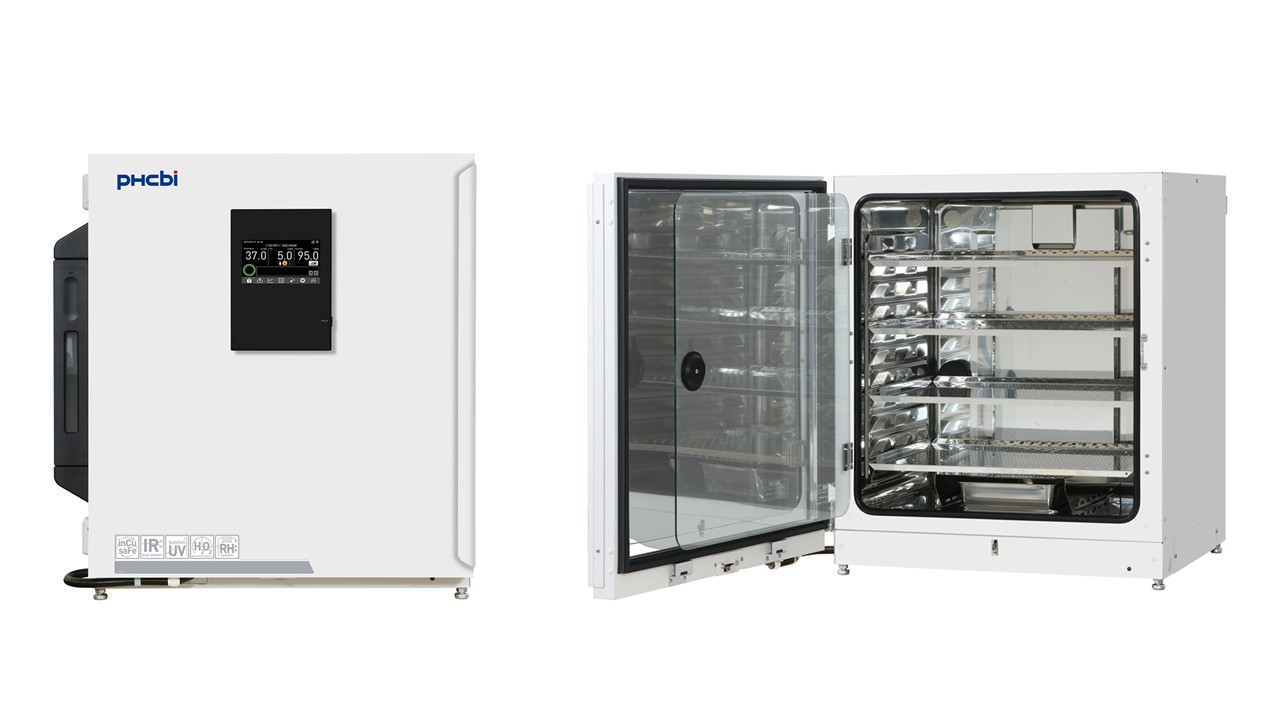
With the new IncuSafe CO₂ incubators MCO-173AICUVHX-PE (165 L) and MCO-233AICUVHX-PE (230 L) , PHC Europe addresses precisely these challenges. The units feature an innovative Active Humidification System that ensures stable humidity levels and recovers significantly faster after the door is opened. This reduces evaporation, minimizes fluctuations, and provides optimal protection for cell cultures.
The incubator integrates multiple technologies to minimize contamination risks and reliably protect valuable cell cultures. The inCu saFe interior, made of copper-enriched stainless steel, provides antimicrobial protection while offering exceptional durability. The SafeCell UV LED lamp continuously decontaminates the circulating air and water without harming the sensitive cell cultures. In addition, rapid H₂O₂ decontamination enables efficient sterilization of the interior: vaporized hydrogen peroxide, combined with UV LED light, removes contaminants and achieves complete decontamination in less than three hours.
The incubator ensures precise environmental control through the Direct Heat and Air Jacket System, which enables highly uniform temperature control with rapid recovery after the door is opened. The dual IR CO₂ sensor ensures accurate monitoring and stable control of the CO₂ concentration without overshoot. With a temperature uniformity of ±0.25 °C, a CO₂ control range of 0 to 20%, and precise PID control, optimal culture conditions are ensured. In addition, the system enables rapid recovery of humidity and CO₂ levels after disruptions and operates particularly quietly with a low operating noise level of approximately 25 dB.
The result: improved reproducibility, greater process stability, and enhanced safety—especially for demanding cell culture applications.
Active Humidification for Stable Growing Conditions
The innovative Active Humidification System combines natural evaporation with heat-assisted vapor generation to ensure stable humidity levels of 95% ±5%. This approach accelerates the restoration of humidity after the door is opened and reduces the risk of culture media drying out.
The even distribution of humidity throughout the entire interior minimizes edge effects and supports demanding applications such as high-throughput screening, organoid development, and low-volume cultures.
Flexible Humidity Control Modes
The incubators offer flexible humidity control for various laboratory procedures and applications.
- Active Humidity Modemaintains a humidity level of 80–90% using the active humidification system without water in the humidification tray, thereby reducing the risk of condensation when analytical instruments are placed indoors.
- High Humidity Modecombines active humidification with natural evaporation from the humidifier tray to achieve stable humidity levels of over 90% RH.
do you have any questions about this article?
We will be happy to help you.