Anyone who develops or produces food today knows that good products aren't just the result of the right recipe. What matters most is how consistently and reliably they can be produced.
As experience grows and demand increases, practical questions quickly arise: How can a consistent shelf life be achieved? How can quality be maintained from batch to batch? And how can new products be developed so that they not only taste great but also function reliably from a technical standpoint?
It is precisely at this point that sterilization transitions from being merely a production step to becoming a critical success factor. Modern systems help combine safety, quality, and efficiency—and lay the foundation for sustainable growth.
Targeted Control of Consistent Shelf Life and Quality
Modern food preservation is no longer simply a matter of heating products. Rather, the goal is to control each process with such precision that the product receives exactly the treatment necessary to achieve the desired shelf life—no more and no less.
The so-called F₀ and P₀ values play a key role in this process. They make it possible to measure the actual thermal effect on the product and enable an objective evaluation of the process. Rather than relying solely on temperature and time, it is possible to determine the actual intensity of the treatment applied to the product.
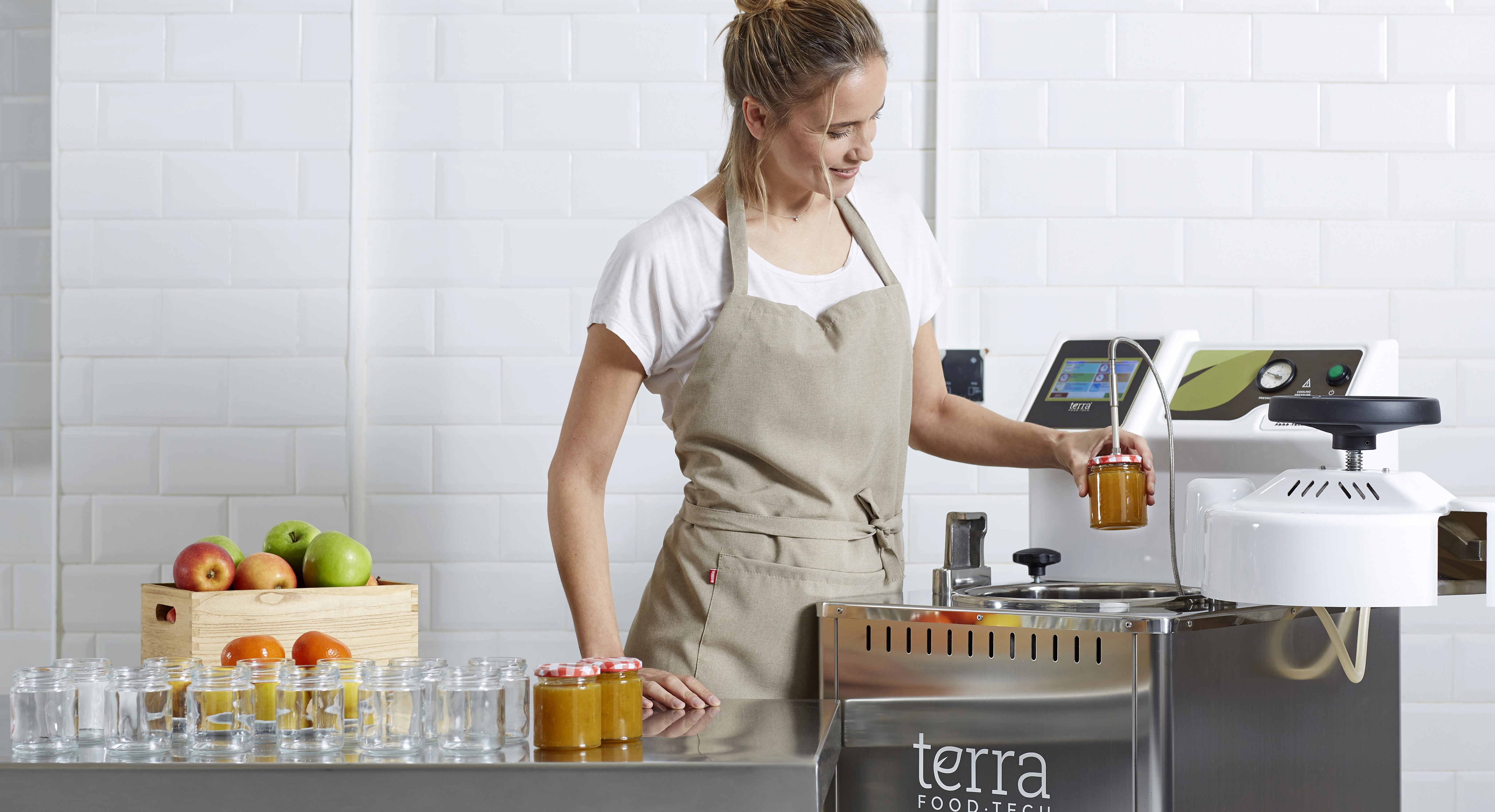
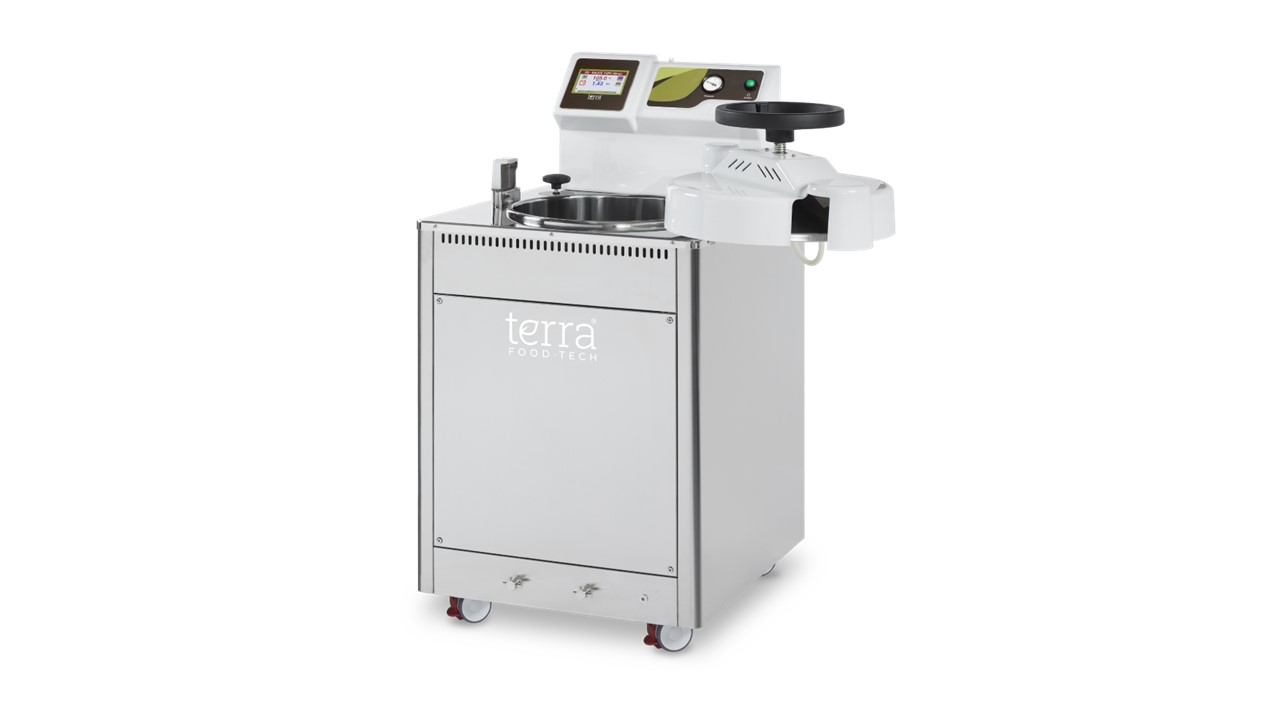
The benefits are immediately apparent: Shelf life becomes more predictable, product quality remains consistent, and successful processes can be reliably replicated. Modern systems such as the TERRA Food-Tech autoclaves also make it possible to automatically record, document, and evaluate these values for each batch.
About the TERRA models:
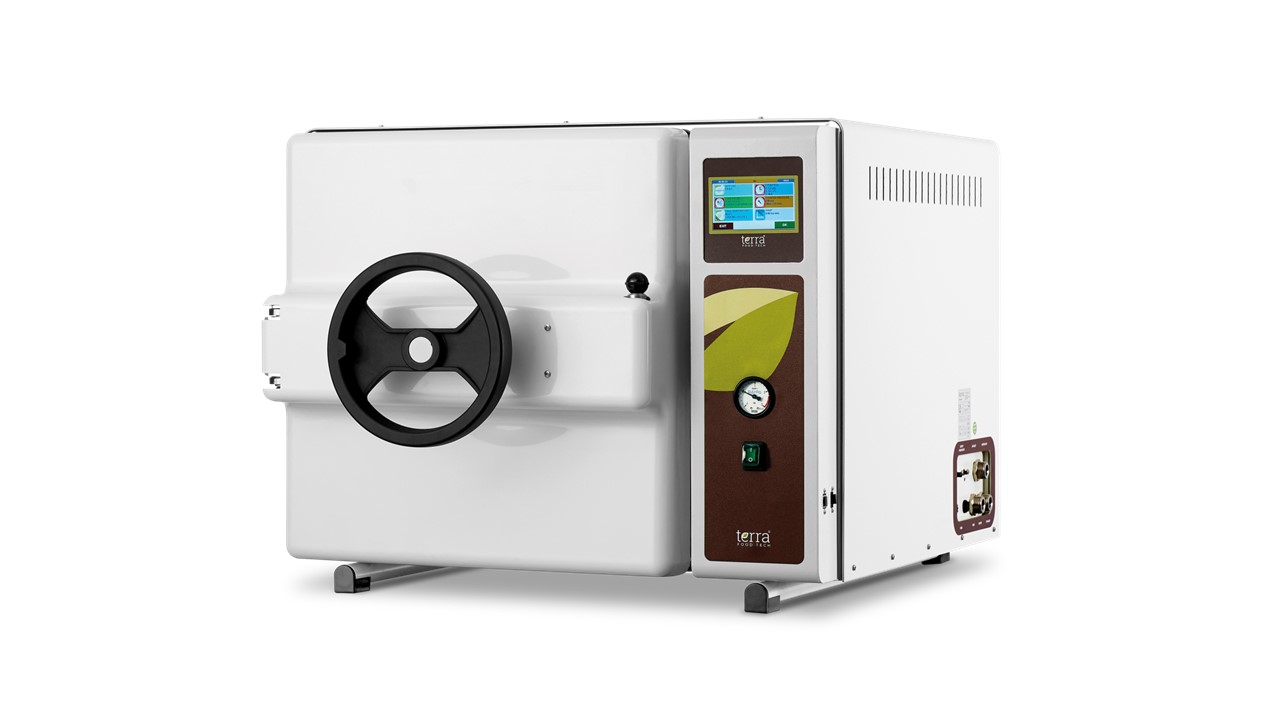
Maintain the highest possible quality. Ensure safety.
Safe and stable shelf life does not have to come at the expense of product quality. By precisely controlling the thermal process, the required microbiological safety can be achieved while minimizing changes in taste, texture, and nutritional properties.
It is important to understand that every heat treatment causes certain changes in the product. The goal of modern processes is therefore not to avoid these changes entirely, but to minimize the organoleptic changes as much as possible while ensuring the necessary product safety.
This aspect is becoming increasingly important, especially for high-quality foods where taste, texture, and authenticity are crucial. A precisely controlled process makes it possible to reliably meet safety requirements while preserving the product’s characteristic properties as much as possible.
Measuring where it really counts: in the product itself
Another important difference among modern sterilization systems lies in where measurements are taken.
Instead of relying solely on the conditions inside the sterilization chamber, modern autoclaves measure the temperature directly within the product. This makes it possible to determine exactly when the most critical point in the food has reached the desired level of heat treatment.
For users, this means:
- maximum process reliability
- No unnecessary delays in processing times
- reproducible and consistent results
Since the process control is based on the actual condition of the product—and not just on the ambient temperature—the treatment can be precisely limited to the necessary extent. This supports both product safety and the preservation of the desired quality characteristics.
This form of control builds confidence in one's own process—especially when developing new products, adjusting formulas, or scaling up to larger production volumes.
From Development to Safe Production
Today's modern autoclaves offer far more than just sterilization. They support the entire process—from product development and the selection of suitable packaging to documented production.
A key factor here is the interplay between the product, packaging, and process. Glass containers, trays, and flexible pouches react differently to temperature and pressure. Through programmable pressure profiles and multi-stage process sequences, the parameters can be specifically tailored to the respective packaging.
The process adapts to the product, not the other way around.
At the same time, modern systems shorten the path from concept to market launch. New products can be developed, tested, and optimized on a laboratory or pilot scale. The insights gained can be directly applied to subsequent production processes. This accelerates development projects, reduces the need for external testing, and facilitates the launch of new products.
Equally important is comprehensive documentation. Temperature, pressure, time, and the sterilization or pasteurization levels achieved are automatically recorded and stored. This ensures maximum transparency for every single step of the process.
For producers, this means:
- Reliable development of new products and packaging concepts
- faster transition from development to production
- Full traceability of every batch
- Easy reproducibility of successful processes
- Professional Documentation for Audits, Partners, and Growth
This results in a consistent and transparent process—from the initial product trials through to mass production.
The Foundation for Sustainable Growth
Those who successfully develop and produce food today usually already have the most important things: expertise, experience, creativity, and a good product.
However, long-term success is only achieved when this potential is translated into a reliable, reproducible, and scalable manufacturing process.
Modern sterilization systems provide precisely this foundation. They combine product safety with quality assurance, enable the efficient development of new products, and ensure the transparency that is becoming increasingly important as production volumes rise.
Ultimately, it is not just the quality of a product that determines its market success, but the ability to reliably achieve that quality in every single batch. That is precisely where a good formula becomes a reproducible process—and a product becomes a sustainable business model.
do you have any questions about this article?
We will be happy to help you.