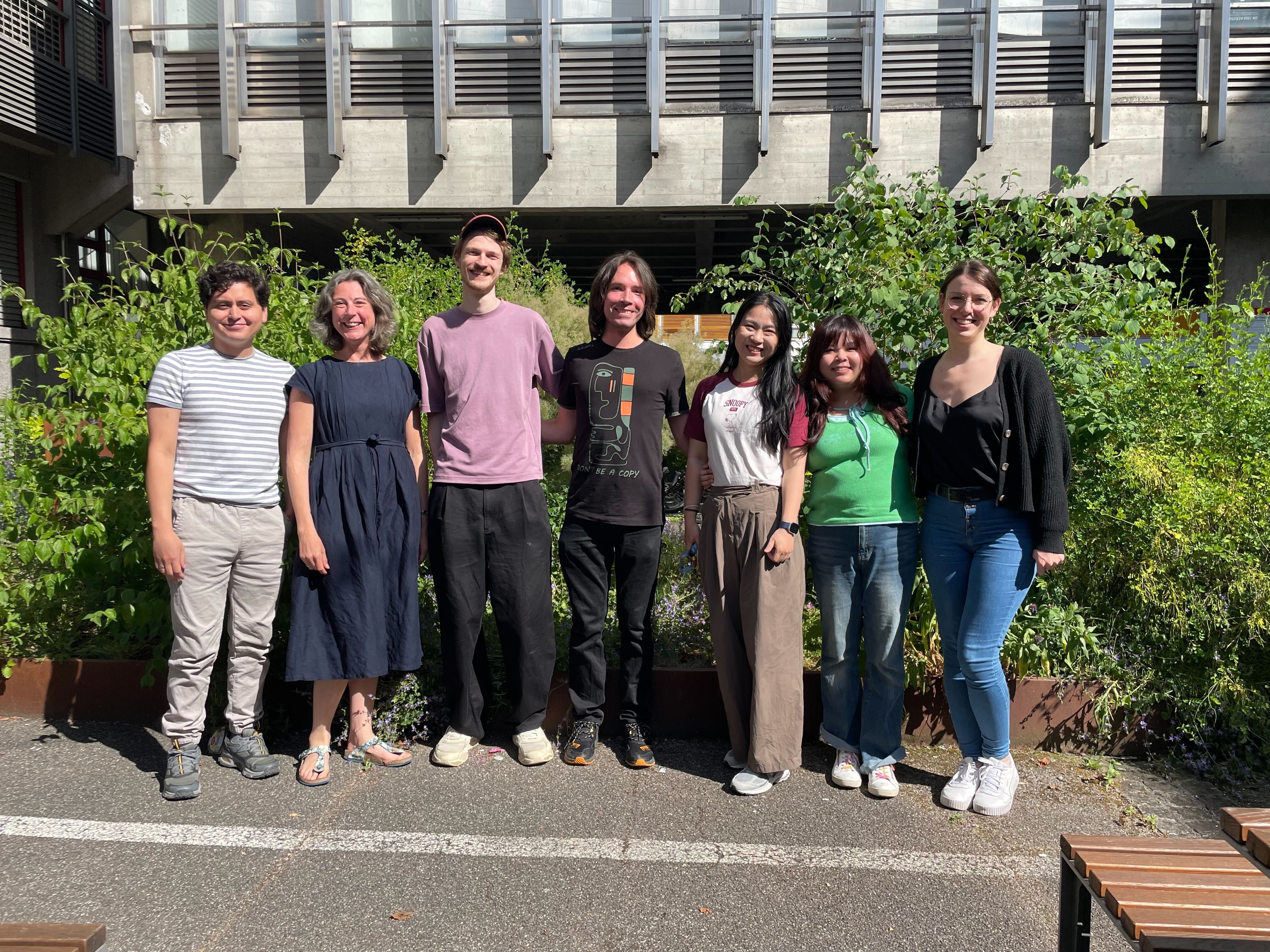
At the University of Geneva, the research group led by Prof. Sascha Hoogendoorn, associate professor in the Department of Organic Chemistry (second from the left in the cover photo), investigates the biological mechanisms of cell communication and develops chemical tools for the targeted study of cellular signaling pathways. This interdisciplinary research combines organic chemistry, cell biology, and genetics, relying on modern microscopy technologies. For high-content imaging applications and cell-based assays, the team relies on solutions from ibidi, which provide a reliable foundation for challenging research projects. In this interview, you’ll learn more about the research activities of Prof. Sascha Hoogendoorn’s group and why they rely on microscopy solutions from ibidi for their challenging research projects.
VITARIS helps research institutions and laboratories select the best ibidi products for their specific applications in cell culture and microscopy. Thanks to our long-standing partnership with ibidi, which began in 2011, we offer expert product advice.
Department of Organic Chemistry at the University of Geneva
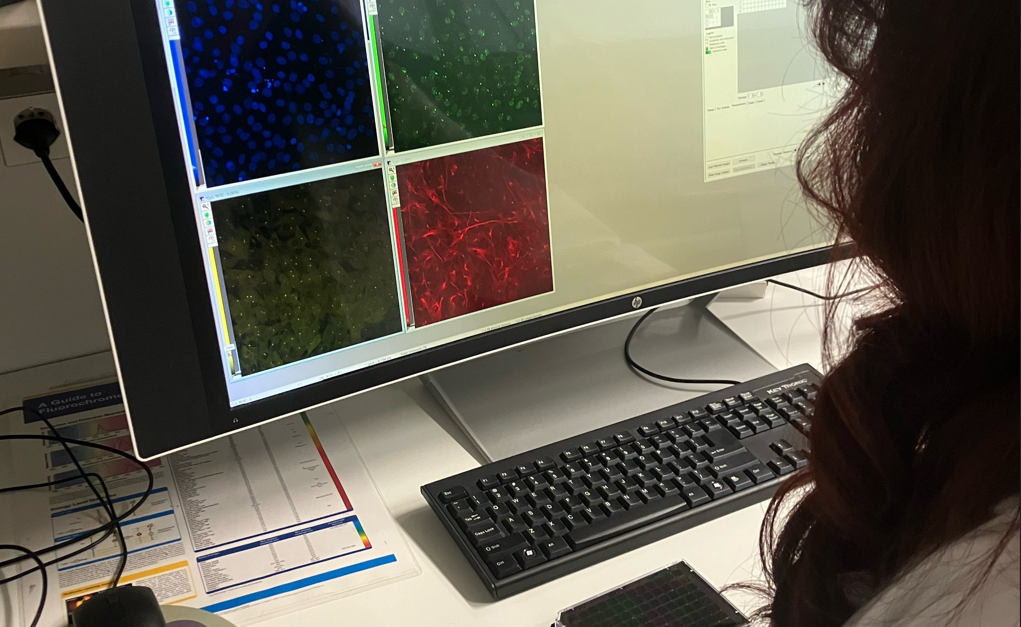
Image Analysis in Prof. Sascha Hoogendoorn's Laboratory
Dear Ms. Hoogendoorn—could you give us an overview of your lab’s activities and its main areas of research?
Prof. Sascha Hoogendoorn: Our research group focuses on developing chemical tools to better understand and selectively influence biological processes. Our research focuses on the primary cilium, a small organelle that protrudes from the cell membrane and functions as the cell’s “antenna.” It enables communication between cells and plays an important role in embryonic development as well as in human health.
What kinds of research or analyses do you typically conduct in your lab?
Prof. Sascha Hoogendoorn: Our research is highly interdisciplinary and combines organic synthesis—that is, the development of new molecules—with methods from biochemistry, cell biology, and genetics. This enables us to generate cell lines with specific fluorescent markers, create gene knockouts to study interactions between drugs and genes, and analyze molecule-protein interactions in vitro.
Precision for Demanding Cell Culture and Imaging Applications
What need prompted you to look for new solutions for your cell culture experiments?
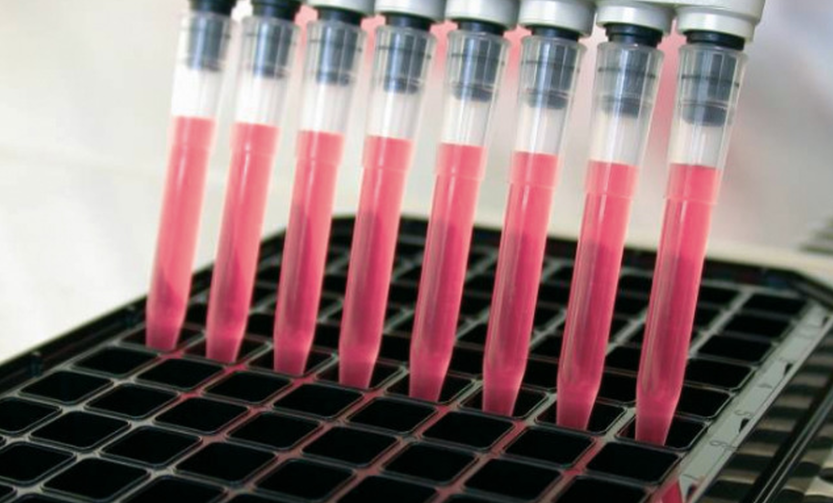
Prof. Sascha Hoogendoorn: We regularly investigate the effects of our active compounds on cells as part of dose-response experiments. Since we usually want to test several active compound analogs simultaneously, this quickly results in a large number of different experimental conditions. That is why we conduct the majority of our microscopy experiments using a high-content microscope, which allows us to analyze up to 96 conditions within a single experiment.
Why did you choose ibidi products?
Prof. Sascha Hoogendoorn: We use the high-content microscope at the ACCESS Facility in Geneva. The compatibility of various microscopy plates was thoroughly tested there, and the plates from ibidi yielded the best results. Based on this recommendation, we chose ibidi, and we now also use other products from the company for microscopy applications with lower sample throughput.
Which ibidi products or solutions do you primarily use, and for what applications?
Prof. Sascha Hoogendoorn: We mainly use 96-well microscopy plates from ibidi for high-content imaging applications. In addition, we have already conducted high-content screens in the 384-well format and use 4- or 8-well chamber slides for experiments with conventional confocal microscopes.
Which features or benefits of ibidi products are particularly valuable for your daily work?
Prof. Sascha Hoogendoorn: In order for our cells to form a primary cilium, they must first grow into a continuous monolayer. Cell adhesion is a crucial factor in this process. Our cells adhere consistently and reliably to the ibidi plates, making them ideal for our experiments.
Relevant New Products at ibidi
do you have any questions about this article?
We will be happy to help you.