At the Department of Biomedical Research at the University of Bern, numerous research projects run in parallel every day. Cell cultures, long-term storage of biological samples, and reproducible conditions are part of everyday life. The technical infrastructure plays a key role in determining the quality, speed, and safety of the research. Patrick Furer, Head of Technical & Facility Services at the DBMR, has been responsible for this very area for the past ten years. His experience highlights the demands that modern life science laboratories place on incubators, ultra-low temperature freezers, and service partners today.
Technical Operations as a Core Service Function
The technical operations team at the DBMR is diverse. Patrick Furer leads a team of ten people. Their responsibilities range from maintaining central laboratory equipment and ensuring the technical infrastructure is in place to providing direct support to researchers in their day-to-day work.
“The services are based in the Technical and Facilities departments and primarily involve the management and maintenance of laboratory equipment such as incubators and ultra-low temperature freezers, as well as supporting researchers in day-to-day laboratory operations,” he says, describing his role. This close connection to laboratory operations also shapes the requirements for equipment and suppliers. Outages or unstable conditions have a direct impact on ongoing projects.
An established infrastructure and limited space
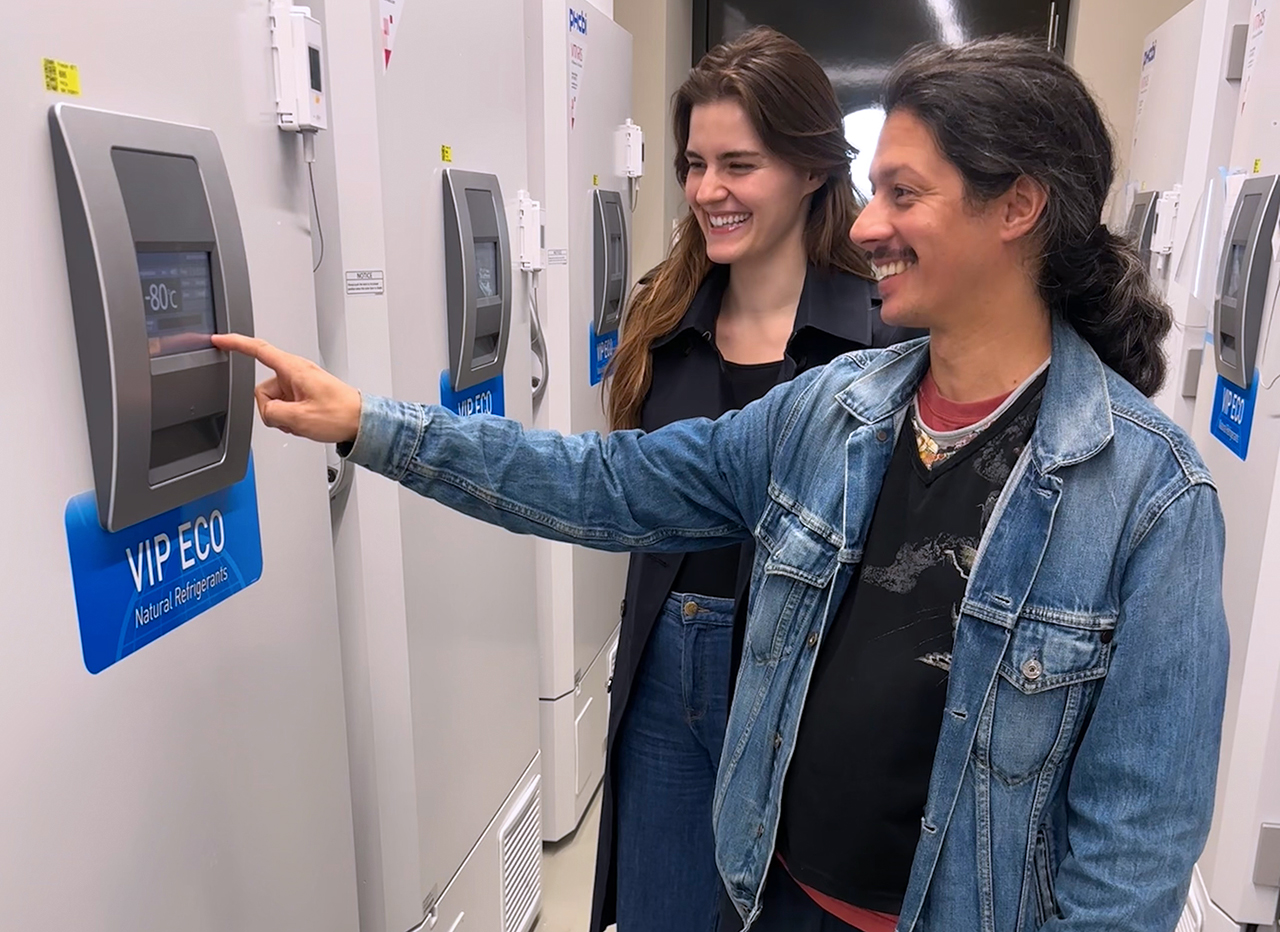
With the move into the new DBMR building on Murtenstrasse starting in 2021, the technical infrastructure continued to expand. Approximately 150 units from PHCbi were installed and commissioned there. These include CO₂ and multi-gas incubators as well as standard –80 °C ultra-low temperature freezers, but also cryogenic freezing solutions down to –150 °C, which are used specifically for the long-term storage of particularly sensitive samples.
At the same time, space remains a scarce resource. “Space is one of the key limiting factors, whether it comes to ULT equipment, floor space, cell culture laboratories, or office workstations,” says Patrick Furer. The growing demand is closely linked to scientific success. Expanding research groups require additional incubation and storage capacity. The equipment inventory must keep pace with this development without further straining the available space.
Applications with high stability requirements
CO₂ and multi-gas incubators, as well as –80 °C and –150 °C ultra-low temperature freezers, are essential pieces of equipment at the DBMR. Incubators are primarily used in cell culture laboratories, while the –80 °C and –150 °C systems are used for the safe storage of samples for current and future research. The research covers a broad spectrum: “At the DBMR, we study everything related to disease, from cancer and infections to the brain and organs,” explains Patrick Furer.
Stable and contamination-free conditions play a crucial role, particularly in the field of cell culture. Modern incubators feature integrated decontamination processes. In particular, PHCbi’s H₂O₂ decontamination offers an effective solution for combating microbial contamination and has become well-established in everyday laboratory practice. This technology significantly contributes to operational reliability by reducing downtime and improving the reproducibility of experiments.
The goal is clear: research should be translated into concrete applications for patients as quickly as possible. Under these conditions, reproducible temperatures and stable long-term conditions are essential. Deviations or disruptions jeopardize samples and data.
Selection criteria based on years of experience
At DBMR, the decision to use specific systems is based on decades of experience. PHCbi products have been in use there since at least 1999. “Our broad portfolio of manufacturers has enabled us to gain extensive experience and identify those devices that are characterized by high durability, reliability, and low maintenance requirements,” says Patrick Furer.
He defines exclusion criteria just as clearly. These include high susceptibility to elevated ambient temperatures, recurring repairs, and inadequate support in the event of service issues. Devices must function reliably in everyday use without requiring constant attention.
Devices that go unnoticed in everyday life
Paradoxically, the greatest added value for the team is evident when the devices are barely noticeable. “You hardly notice the devices in everyday life; they run reliably and without any glitches,” says Patrick Furer, describing how they operate.
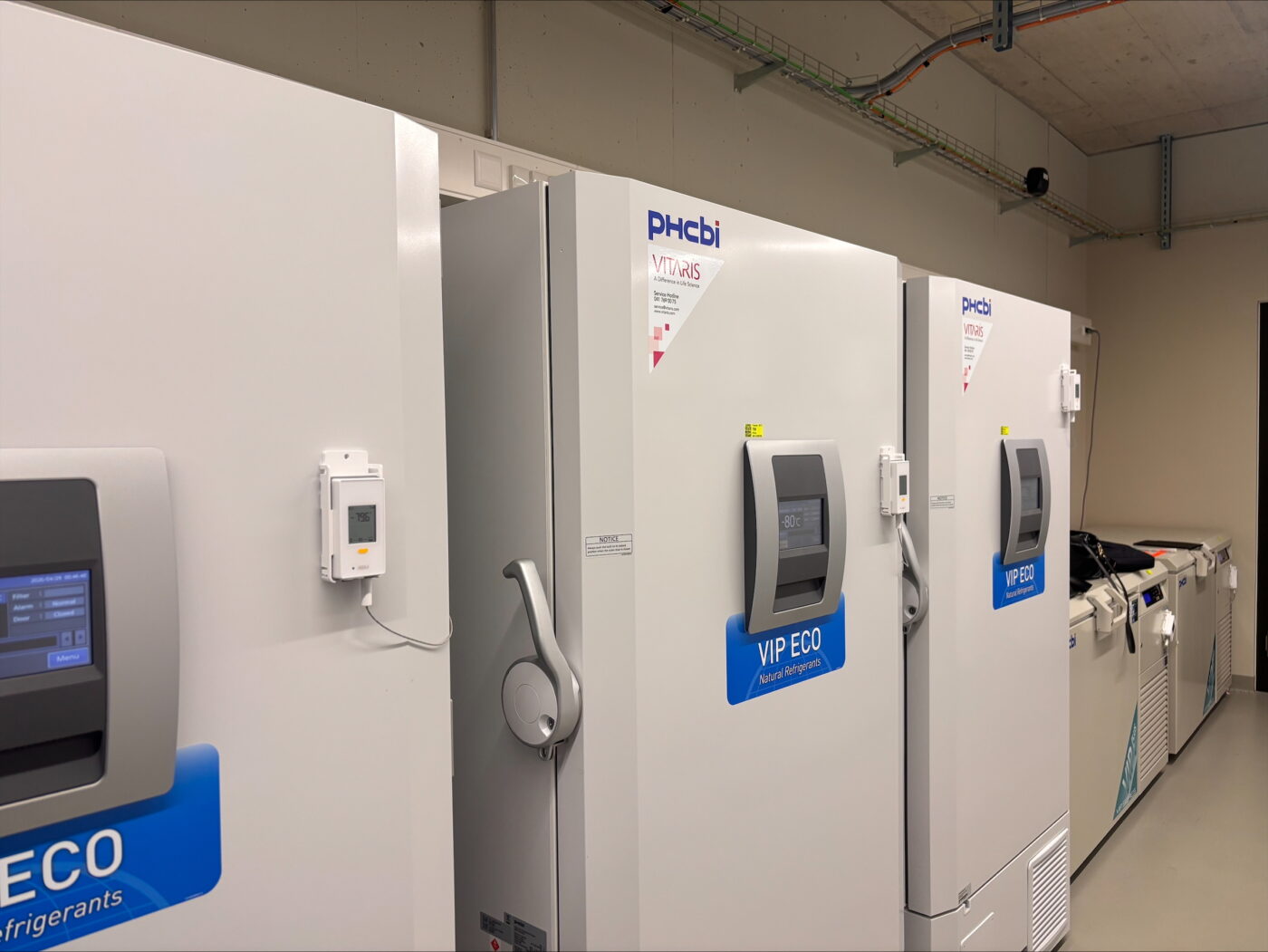
A monitoring system allows for continuous tracking of temperature trends. Based on this data, the team confirms consistent stability and good reproducibility over the years. The commissioning of new systems generally goes smoothly. “Provided the building infrastructure allows it, commissioning is largely plug-and-play,” he says.
User acceptance
New equipment is being procured for various end users. There have been no critical inquiries from the laboratories. The systems are well-established, and confidence in them is high. “Researchers have great confidence in the reliability of the equipment, both for ultra-low freezers and incubators,” reports Patrick Furer. This level of acceptance reduces the need for training and simplifies operations in an environment with high turnover of projects and staff.
Service as a key factor
In addition to the quality of the equipment, service plays a key role. We deliberately source our equipment through Vitaris. Customer support is the deciding factor. “Our partnership is reliable, solution-oriented, and characterized by transparency and a deep technical understanding of our needs,” says Patrick Furer.
The numbers speak for themselves. Out of approximately 150 installed units, only one experienced a malfunction. The issue was quickly identified, and the unit was easily replaced. Fast response times and the availability of replacement parts are crucial in day-to-day operations, especially since a large portion of maintenance is performed in-house.
A Look Ahead at Operations in the Coming Years
Looking ahead to the coming years, Patrick Furer sees further potential for improvement in knowledge transfer. Regular refresher workshops for end users could help reinforce proper equipment handling. The focus remains clearly on operational safety, low maintenance, and stable conditions.
The experience gained in Bern demonstrates the strong interdependence between technical infrastructure, service quality, and research performance. It provides practical guidance for life sciences laboratories with similar requirements.
do you have any questions about this article?
We will be happy to help you.