
Laboratory balances are high-precision measuring instruments and a technical masterpiece in the sensor sector. It is therefore particularly important to take care when purchasing and handling them. The following article tells you what you should look out for when buying a balance and which points are crucial when handling it.
What should I consider when buying a laboratory balance?
When buying a laboratory balance laboratory balance primarily on three central criteria: Measuring range, readability and requirements. The measuring range describes the minimum and maximum capacity and thus indicates the weight spectrum that the balance can record. The readability, also known as resolution or number of decimal places, determines how finely your measurements are displayed and how many decimal places you need for your work. Requirements are any additional conditions that your application places on the scale. The following general questions will help you to clearly define these requirements:
- What do you weigh? Are the samples sensitive, very small or large? Are they susceptible to static charge or are they highly viscous products that require special filters or environmental conditions?
- In which environment are you weighing? Laboratory, production or outdoor use?
- Does the scale have to be calibrated to a specific height (postal code)?
- Do you need special options for data transfer, such as printing or exporting data?
- Are there specific documentation or labeling requirements, e.g. GLP/GMP/GCP/ISO conformity?
- Are there any regulatory requirements that you have to comply with, e.g. USP or FDA?
- Do you need "Legal for Trade" approvals?
- Does the scale have to be washable or dustproof? (Keyword: IP protection class)
Scales are usually categorized according to their readability and maximum capacity. Terms such as precision balance, analytical balance, compact balance, semi-microbalance, microbalance or ultra-microbalance are common terms in the industry, but are not strictly standardized categories. There are official classifications of scales, but they concern the accuracy, not the product designation (e.g. OIML / EN / calibration law).
Purchasing guide from A&D InstrumentsWhat should I bear in mind when handling a scale?
Tip 1: Location and rootstock
Laboratory scales are sensitive to vibrations, sunlight, temperature and humidity fluctuations and draughts. Areas with a lot of foot traffic, large laboratory equipment or direct sunlight often lead to drift or inaccurate results. Install the balance in a quiet area, ideally in a corner of the room and away from doors, windows and large laboratory equipment (e.g. laboratory refrigerator). A low-vibration table, constant temperatures and a relative humidity of between 45-60 % will significantly improve the measurement results.
Anti-vibration plates or an anti-vibration table can be used to counteract vibrations. The use of an anti-vibration table is recommended from the semi-microbalance class upwards.
Tip 2: Electrostatic charging
Electrostatic charges, e.g. from plastic containers or dry air, can affect samples and falsify weighing results. Even small charges are problematic, especially with microbalances. Ionizers neutralize these charges by generating positive and negative ions and thus ensure reliable measurement results.
Tip 3: Weighing vessels
Vessels that are too large increase the influence of air currents, while open vessels encourage evaporation. Plastic can become electrostatically charged, metals can interfere magnetically - both influence the result. Choose the smallest possible container that holds the sample securely. Seal liquids if possible. The material should be non-reactive, antistatic and non-magnetic if possible.
Tip 4: Levelling
The "leveling" of a laboratory balance refers to the alignment of the balance in an exactly horizontal position. In practical terms, this means that the balance is set up so that its weighing pan is perfectly horizontal. Many laboratory balances have built-in spirit levels or small bubble levels to assist with this.
Tip 5: Hands
Even a fingerprint has a certain weight. Grease and oil residues from hands can contaminate laboratory scales and samples, corrode the surface of the scales or falsify measurement results. Therefore, laboratory scales should only be touched with clean hands or gloves to avoid contamination. Clean, lint-free gloves prevent contamination.
Tip 6: Technical service
Laboratory balances are highly sensitive measuring instruments whose accuracy is crucial for reliable results. They must therefore be regularly calibrated and maintained. In addition to routine maintenance, IQ (Installation Qualification) and OQ (Operational Qualification) checks are also important to ensure that the balance is installed correctly and functions reliably. In some cases, calibrations are carried out in accordance with specified standards to ensure measurement accuracy and traceability to national or international standards. Consistent maintenance and calibration thus ensures the quality and validity of all laboratory results.
Tip 7: Operational readiness
After switching on, the scale needs time to warm up to operating temperature. Without sufficient warm-up time, the measured values may be unstable and not comparable. The more sensitive the scale, the longer the warm-up time. For high-precision devices, this can take several hours. The operating manual provides information on the optimum warm-up time. It is therefore advisable to leave the scale in standby mode instead of switching it off completely every day.
Tip 8: Overload
A&D scales have various mechanisms to protect against overloading. Mechanical solutions such as leaf springs or overload stops prevent damage caused by excessive loads, while electronic systems and sensors detect and report strong shocks. High-precision models also use robust load cells and impact shock detection to protect measurement accuracy and the device.
However, each scale has a maximum capacity; if this is exceeded, the sensor can be permanently damaged. Therefore, objects should always be placed carefully on the weighing plate, the maximum weight - including the container - should be observed and the scale should be checked after overloading and recalibrated if necessary.
Tip 9: Cleaning
Cleaning ensures that measurements remain accurate, cross-contamination is avoided, safety in the laboratory is guaranteed and the longevity of the balance is maintained. When cleaning, you should follow the manufacturer's instructions to avoid damaging the balance. Gentle cleaning agents and lint-free cloths are usually recommended, aggressive chemicals are often taboo.
Supporting services from VITARIS
In addition to the A&D laboratory balances VITARIS offers the following products and services for handling balances:
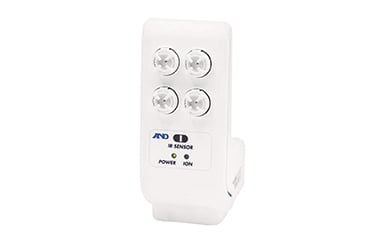
Ionizer
AD-1683A - against electrostatic charge
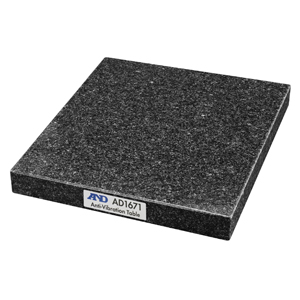
Anti-vibration plate
AD-1671 - ideal for micro and semi-micro scales.
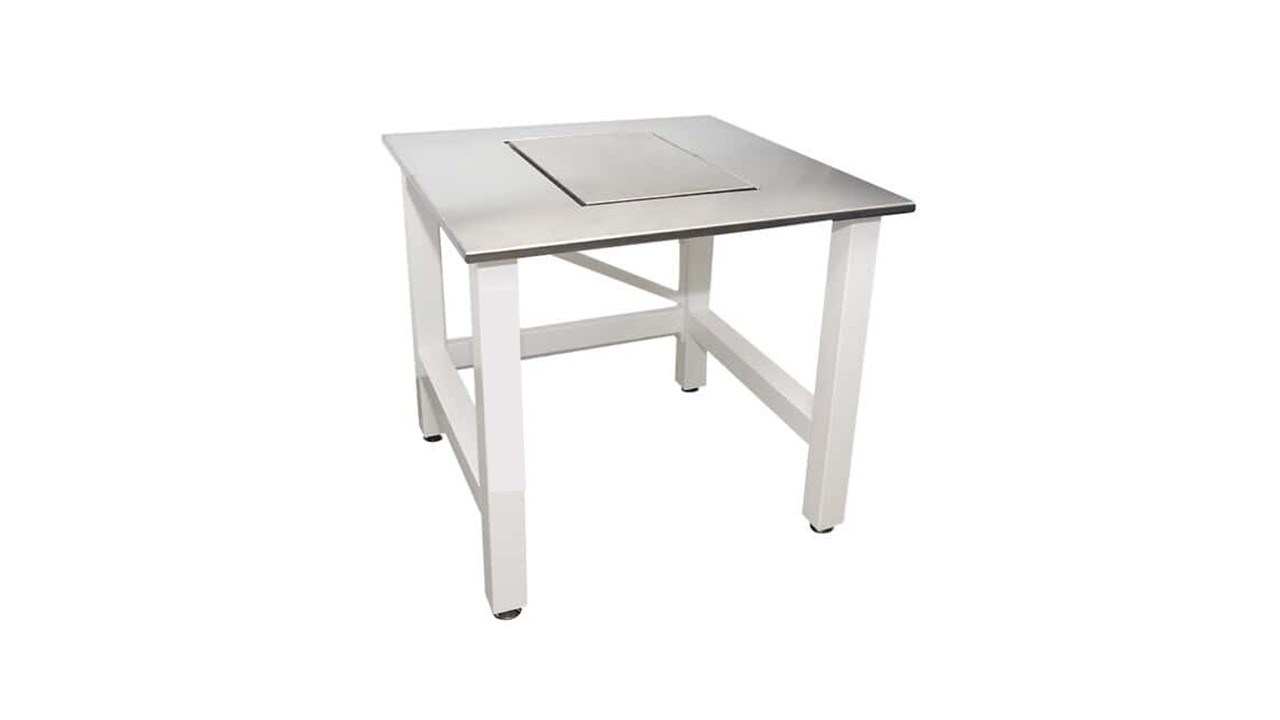
Anti-vibration table
ADI-MWT - ideal for micro and semi-micro scales.
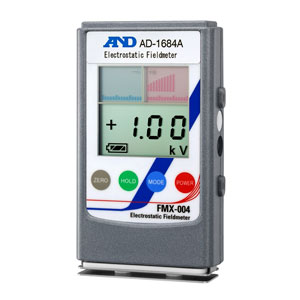
Electrostatic field meter
AD-1684A - for electrostatic field measurements
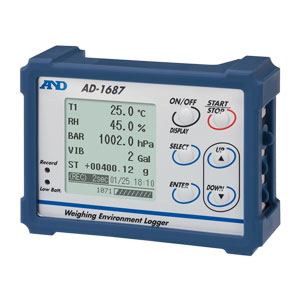
Weighing environment logger
AD-1687 - Temperature, humidity, air pressure, vibration
& weighing data

Service
Installation, IQ/OQ, maintenance, calibration, accredited calibrations, etc.
do you have any questions about this article?
We will be happy to help you.