Not every application can be sensibly accommodated in a standard safety cabinet. Many laboratories use equipment, culture vessels, or experimental setups that require more depth, height, or free work surface than classic standard models offer. This applies, among other things, to microbiological work with extensive material provision, pharmaceutical development processes, or applications in which additional equipment must be placed within the safety zone. A larger work zone is not just a question of comfort. It can help to make workflows more stable, arrange materials more safely, and reduce airflow disturbances.
More space for equipment, materials, and safe procedures
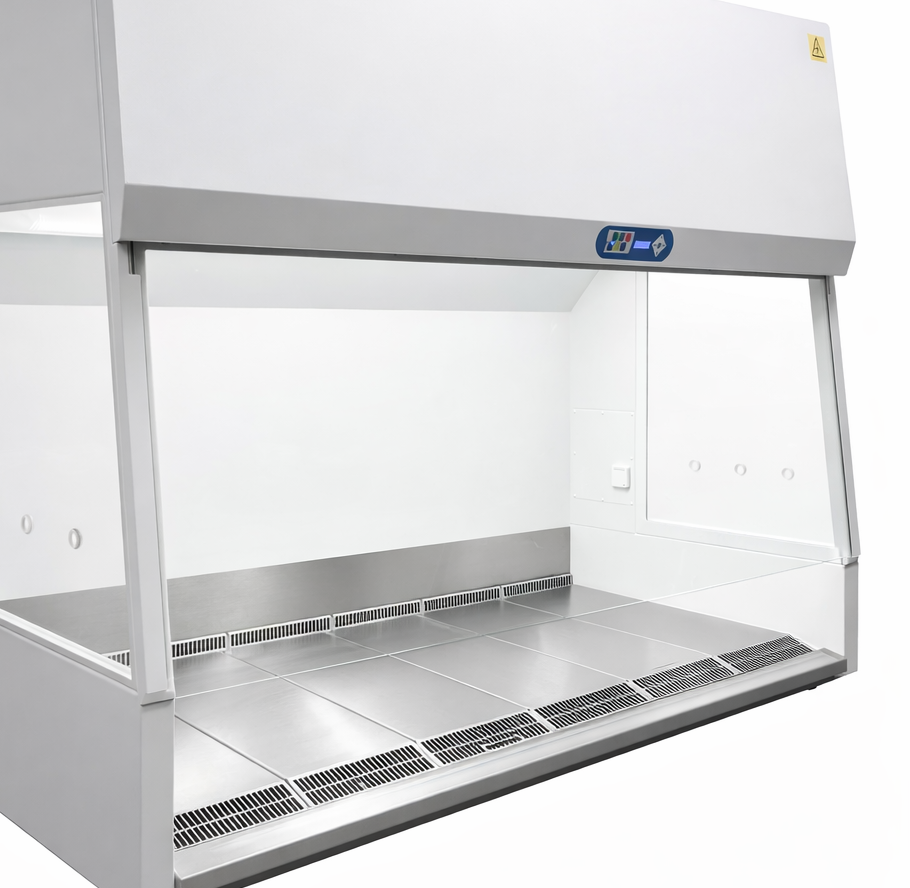
The XL safety cabinet expands the available workspace compared to standard models. XL safety cabinets expand the usable work zone in terms of depth and height. This creates more space for larger reaction vessels, tall containers, or complex experimental setups. At the same time, the work area can be better structured, which is a practical advantage for extensive work steps involving many materials.
Especially in applications with bulky components or densely populated work surfaces, standard dimensions increase the risk of airflow and handling being impaired. A larger work zone can help to position materials further apart and keep the work process more organized within the safety zone.
Installation in existing laboratory buildings
A key issue with large-format safety cabinets is their installation in existing buildings. Many laboratories are located in infrastructures with limited door widths, elevators, or traffic routes. This means that not only subsequent use but also installation becomes a relevant selection criterion.
Labogene's modular solutions with removable components offer a clear advantage here. If larger systems can be transported through standard doors and assembled on site without structural modifications, the logistics and installation costs are significantly reduced. For operators, this is a particularly practical consideration in existing buildings.
Technical platform and serviceability
The underlying technical platform is also a relevant criterion for special sizes. If XL models are based on proven components from existing series, this simplifies service, spare parts supply, and technical support. For laboratories, this reduces the risk of introducing a special system that is functionally suitable but costly to operate.
From the user's point of view, this is particularly useful when a larger work area is required, but the other requirements for operation, maintenance, and technical infrastructure should remain as close as possible to established systems. This facilitates training, maintenance, and long-term planning.
Variants and project-specific adaptations
The first XL product type from Labogene was the Mars XL model with a working width of 1800 millimeters and a usable depth of 635 mm. However, XL safety cabinets are not limited to a single format. The design is based on the same technical system as the existing Labogene safety cabinets. On this basis, internal widths of 900, 1200, or 1500 millimeters can also be achieved.
Depending on the application, the design can be Class I, Class II, or a clean bench. This includes, for example, the Class I and Jupiter XL model series or clean benches such as the Fortuna XL model. The Fortuna XL even offers a usable working depth of up to 800 mm. Technical suitability is determined by the specific use and not by the maximum available size. Additional requirements relate to base frames or ergonomic aspects. Electrically height-adjustable solutions are possible as long as the height and stability of the overall construction are maintained. In the case of large workbenches, design limitations must be taken into account.
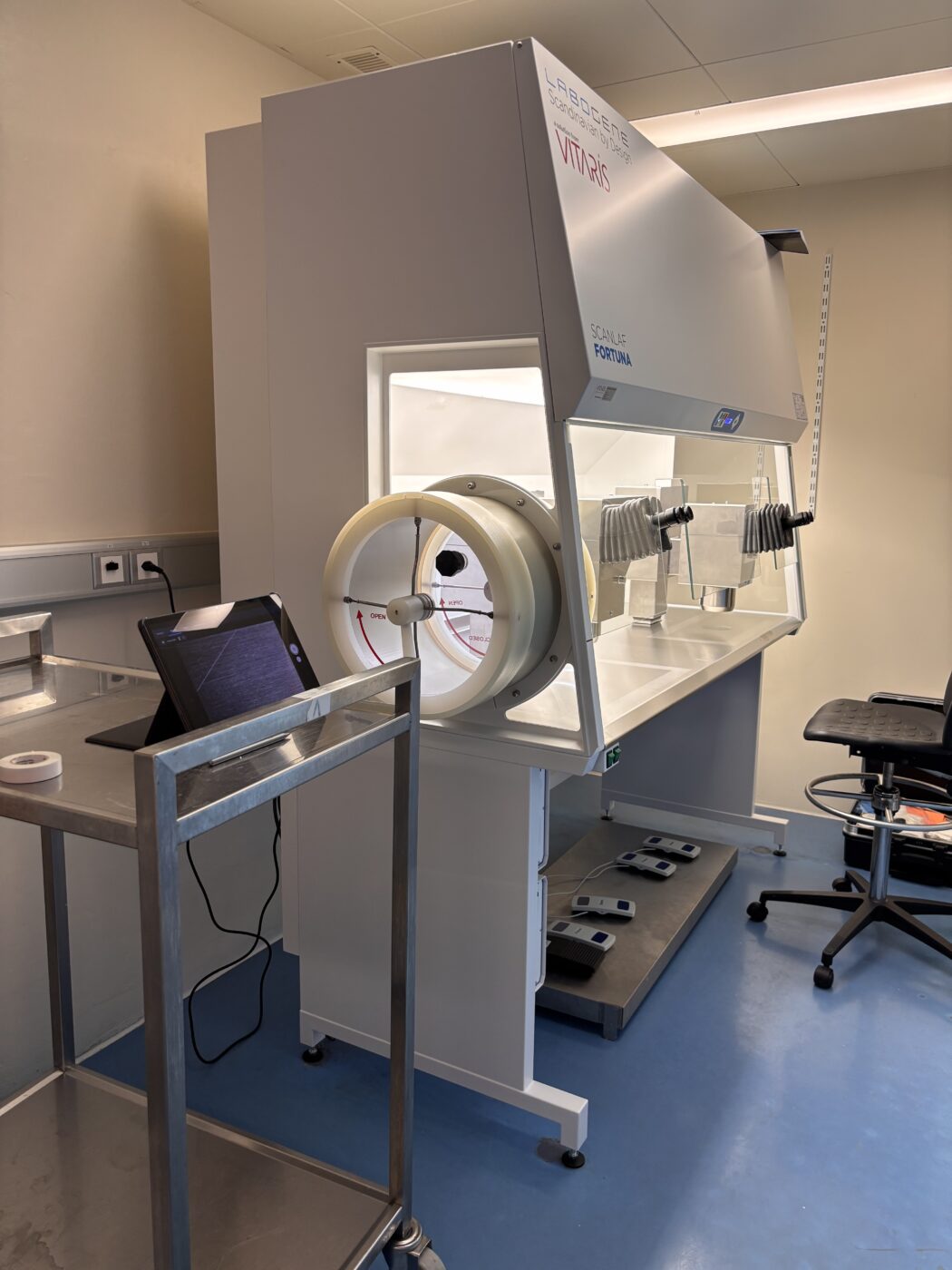
Classification of the XL platform and important criteria for evaluation
The XL safety cabinet expands the Labogene portfolio for applications requiring more space in the work area. It offers a larger work zone and can be integrated into existing laboratory environments. Installation, maintenance, and operation are based on the same technical system as the existing Labogene safety cabinets.
For laboratories with complex equipment or extensive work processes, this platform can be an alternative to project-specific custom-made products. Two factors are therefore decisive when choosing an XL format: the actual need for additional work space and the question of how the system can be integrated and installed in existing buildings.
do you have any questions about this article?
We will be happy to help you.