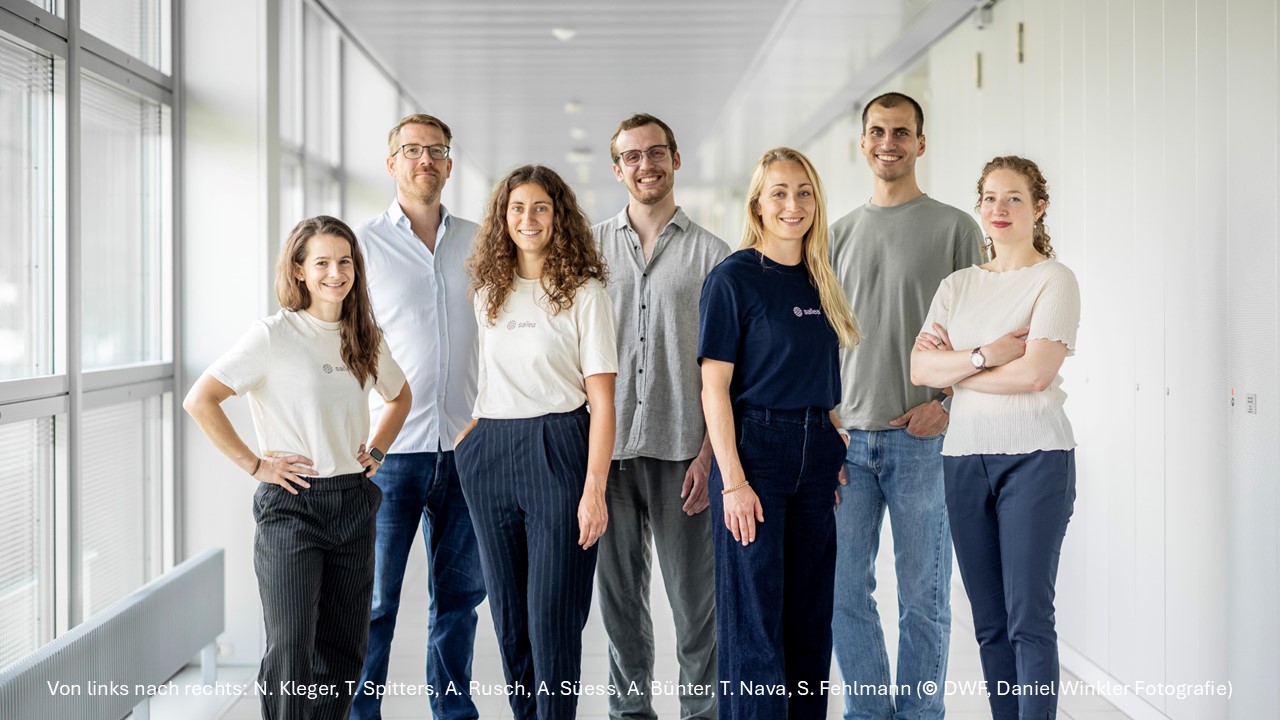
In our new article category "Innovation Corner", we present visionary start-ups that are enriching the market with innovative ideas. This time, we take a look at the company SALLEA. The start-up was founded in November 2023 and is based on the ETH Hönggerberg campus in Zurich. The young company currently employs around eight people. SALLEA focuses on the development and production of edible, highly porous 3D cell culture scaffolds known as scaffolds.
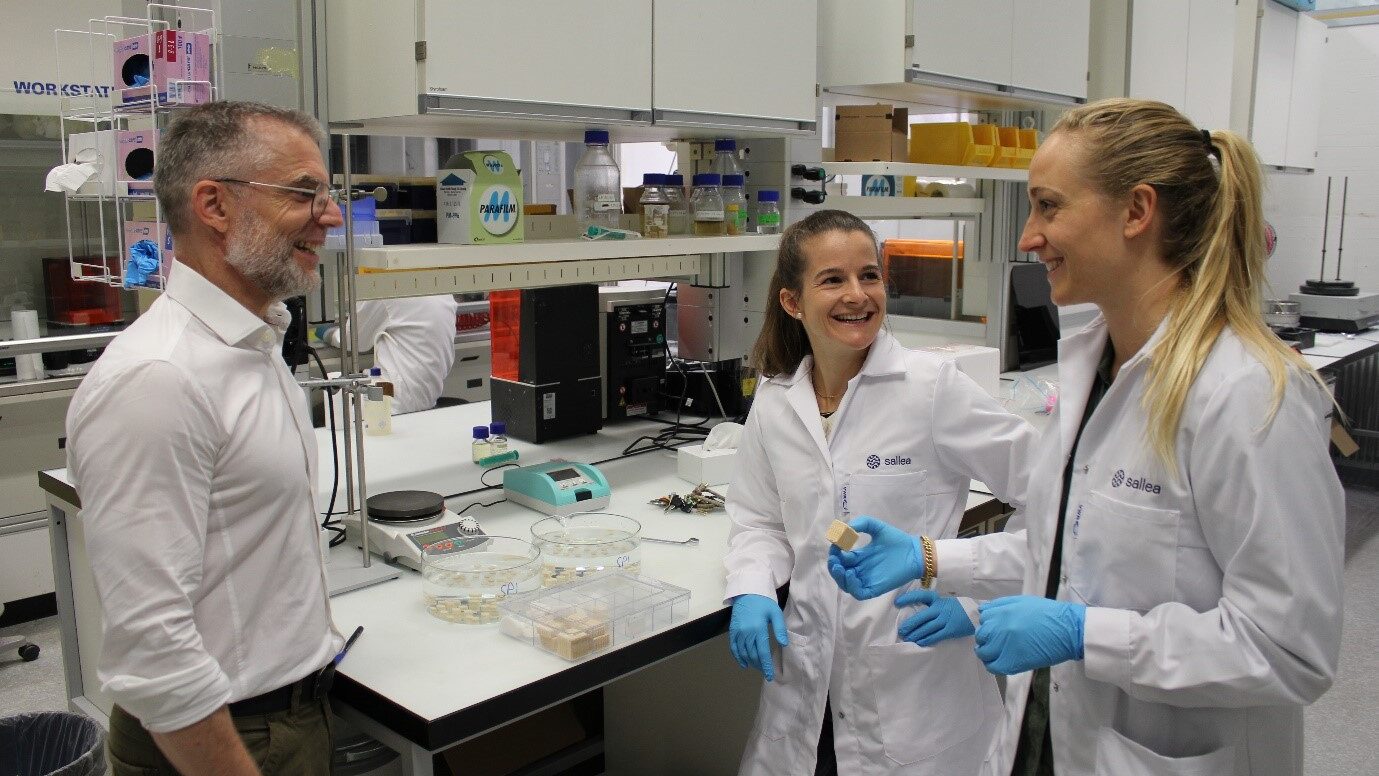
SALLEA's scaffolds consist of plant-based proteins such as soy, peas or lentils. These scaffolds enable the cultivation of whole pieces of meat or fish ("whole cuts") in bioreactors and thus address a central challenge of cell-based food production. The start-up is on a solid financial footing: a pre-seed round of CHF 2.2 million, supported by Founderful and Kost Capital - as well as an additional CHF 1.8 million in non-dilutive funding will secure the next steps in product development. A first functional MVP of edible scaffolds has already been realized and pilot projects with industry partners are underway.
VITARIS is delighted to introduce the start-up to our readers and customers. We had the opportunity to get to know the founding trio, visit their location and conduct an interview. We are supporting the start-up with this article and other initiatives - because innovations deserve to be heard.
Interview with Nicole Kleger and Anna Bünter from the founding team
What exactly does SALLEA do - how would you describe your company in a few sentences?
Anna Bünter: We are developing edible, plant-based scaffolds - known as scaffolds - that are specifically designed for the production of cultured meat and fish. Our technology enables producers to manufacture structured products such as steaks or fillets in bioreactors. In this way, we want to make a contribution to more sustainable food production.
How and when did the idea for SALLEA come about? Was there a particular trigger or aha moment?
Nicole Kleger: The idea came about during my doctoral thesis at ETH Zurich. I was working on a process for producing porous structures using water-soluble salt molds - originally for applications in medical technology. At some point, I realized that this method could also be exciting for 3D cell cultures in other applications, such as in life sciences or in the field of cellular agriculture. When the team recognized the potential of scaffolds for cultivating meat and public interest in these new foods grew, the time had come to turn it into a company.
How did the founding team come together?
Nicole Kleger: We three founders already knew each other from university and even from high school. Each of us brings a different strength to the table. I am responsible for the technological part and lead the development, Simona as CEO takes care of the strategic direction and financing and Anna contributes her experience from management consulting, especially in operational development and commercialization. The roles are clearly divided, but we work very closely together.
What surprised you most on the way to founding the company - both positively and negatively?
Anna Bünter: We were pleasantly surprised by how open the Swiss start-up ecosystem is. We have received great support from programs such as Venture Kick, but also from investors who believe in our concept and us as a team. On the other hand, the regulatory framework was challenging. It takes a lot of patience to find your way in the cultivated food sector, especially when it comes to approvals and food safety.
What specific problem are you addressing with your solution?
Nicole Kleger: One of the main challenges in cell-based meat production is that most products can currently only be produced in the form of minced meat or thin layers. What is missing are structured pieces such as steaks or fillets and large volumes of end products. With our scaffolds, we create a textured framework on which cells can organize themselves. This creates a structure that is close to nature. The large surface area of the scaffold structures also makes it possible to grow large quantities of cells. This is a real game changer for many manufacturers.
For which target groups or areas of application is your product best suited?
Anna Bünter: Our technology is also conceivable in other areas, such as medical technology. Nevertheless, we are currently concentrating on the food industry.
What material can scaffold frameworks theoretically be made of?
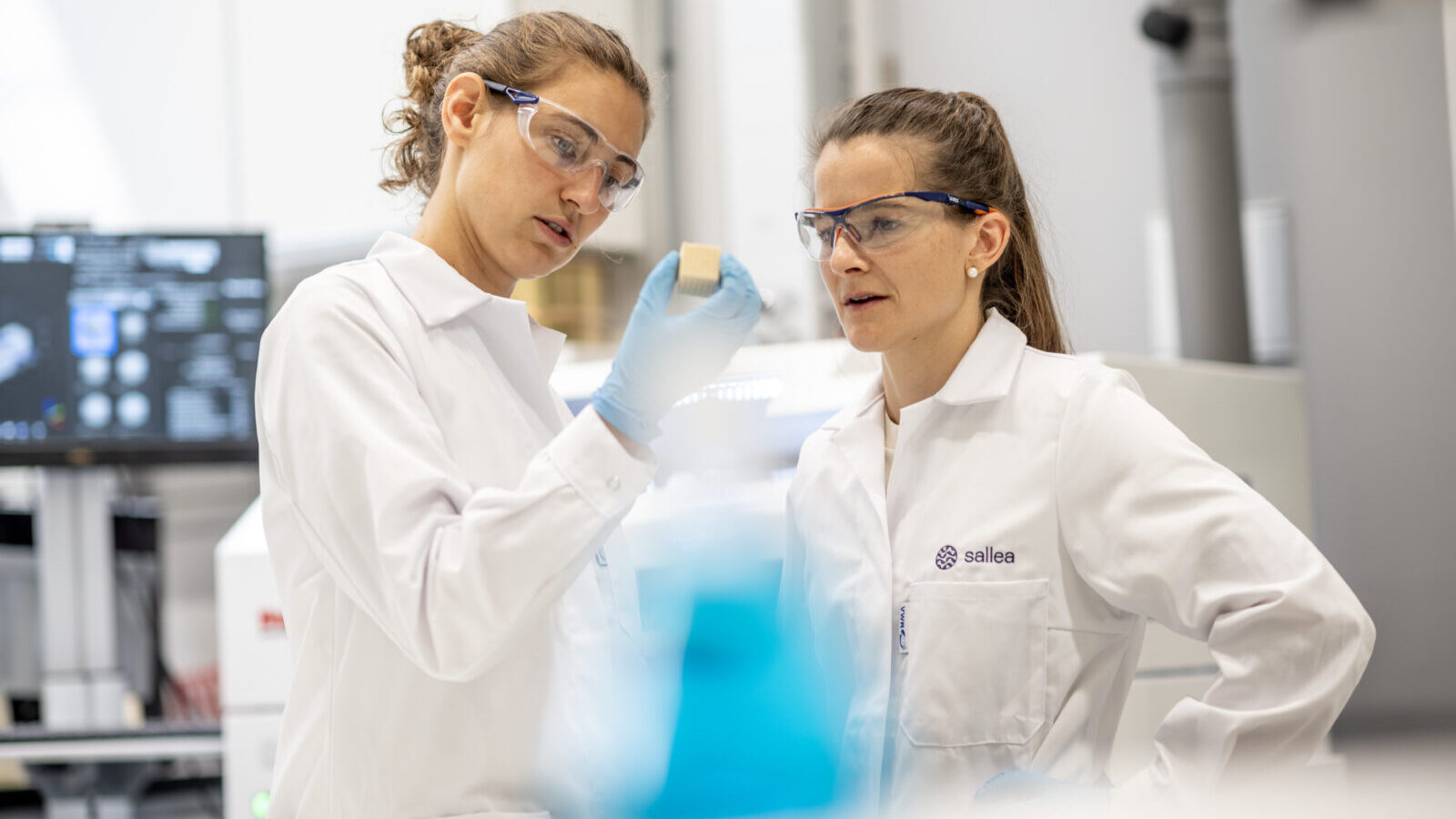
Nicole Kleger: Theoretically, there is a wide range of materials - from plant proteins and cellulose to synthetic polymers or even light metals. For applications in cellular agriculture, however, it is important that the material is food-safe, edible and harmonizes well with cell cultures. It's not just about geometry, but also about nutrient transport and biocompatibility.
What materials are currently or potentially used in scaffold scaffolding? Why these?
Nicole Kleger: We are currently working mainly with plant proteins. These are edible, well tolerated, accepted by regulators and can be easily processed into porous structures. They fit in with our goal of offering a purely plant-based, scalable solution for the food industry.
How complex is the application of your product - is there anything special the customer needs to consider?
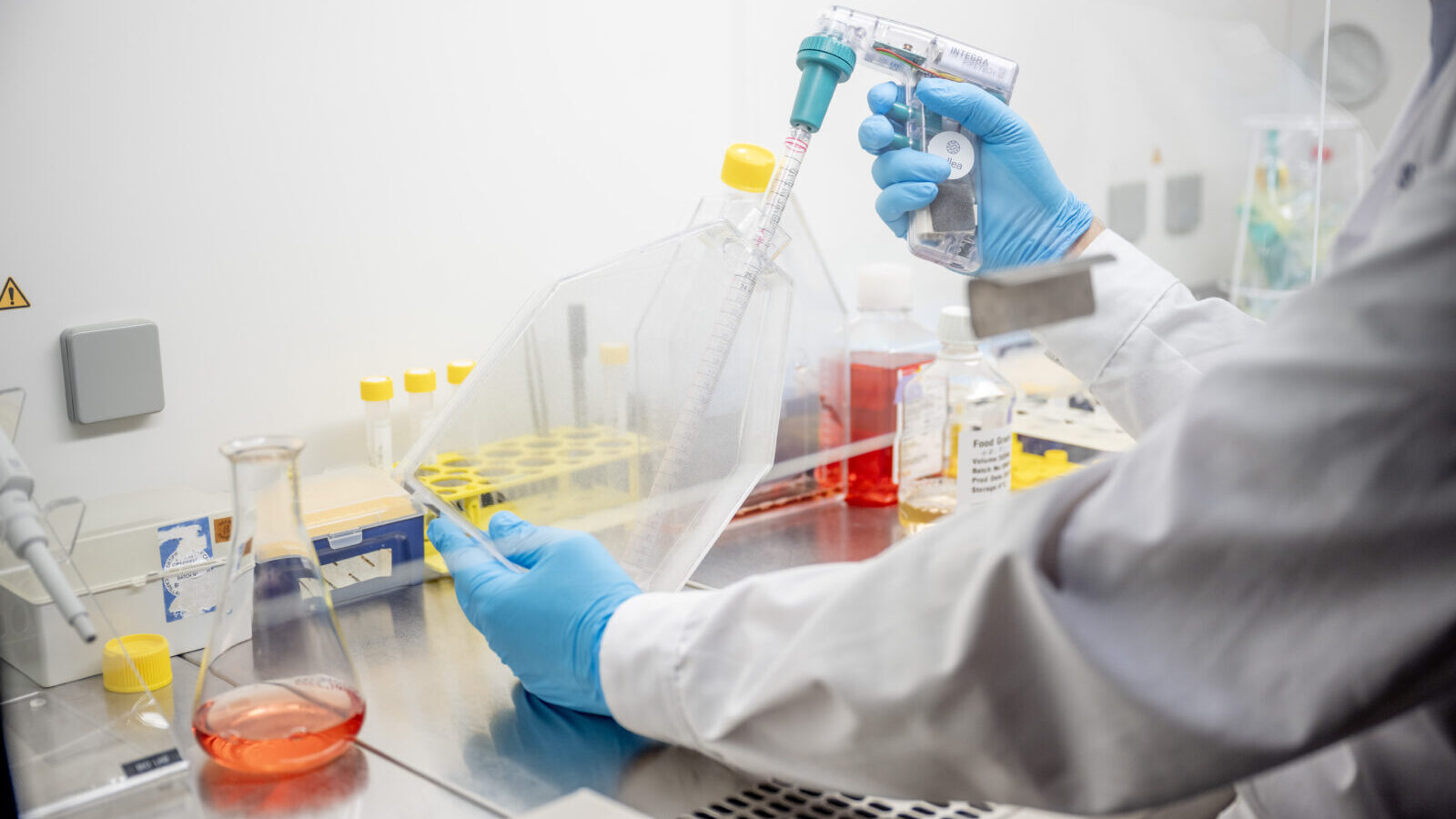
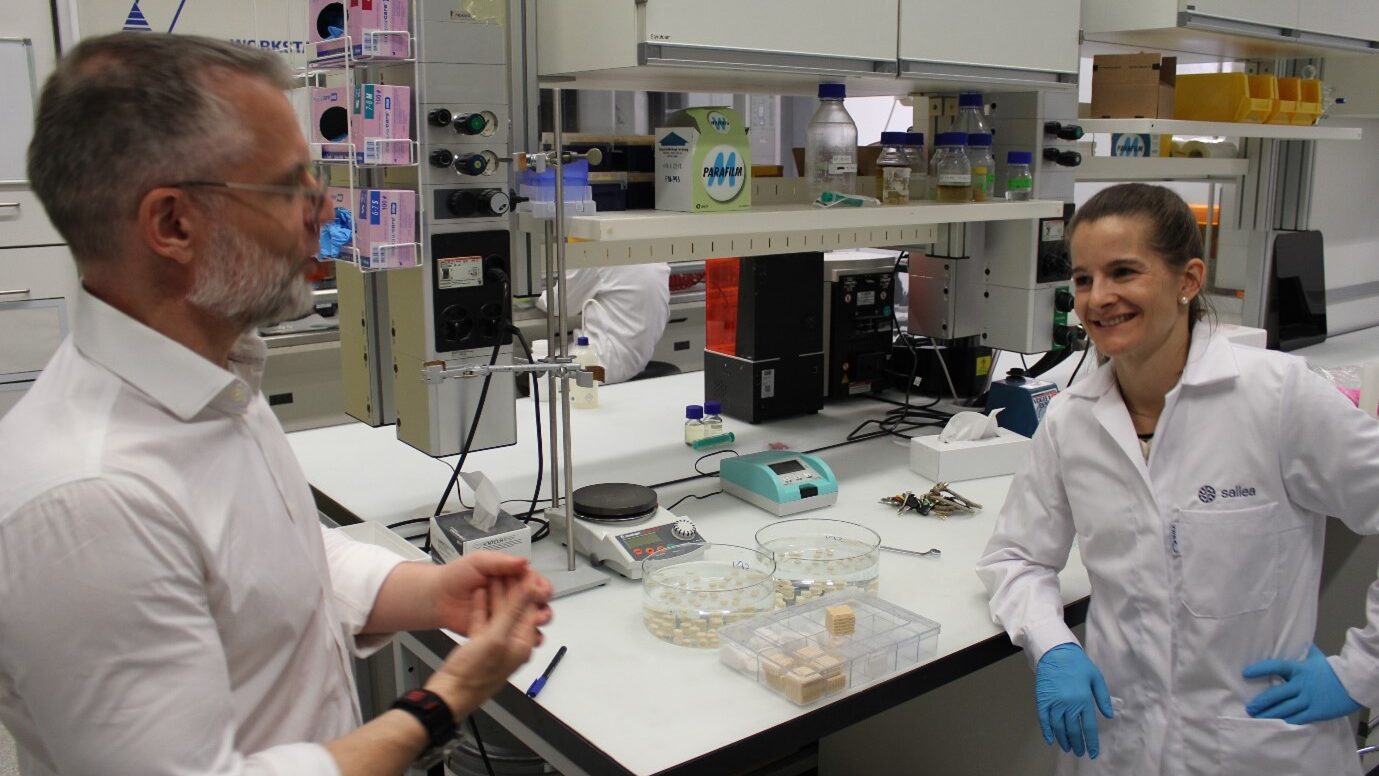
Anna Bünter: Our scaffolds are designed so that they can be integrated into existing bioreactors as easily as possible. It is important to us that the application is uncomplicated for the customer. Of course, there are adaptations depending on the cell type and the desired end product, but we work closely with our partners.
Is it possible to make customer-specific adaptations or do you work exclusively with standard solutions?
Nicole Kleger: We deliberately do not offer standard solutions. Our scaffolds can be tailored to the customer in terms of shape, structure, texture and even content. Every cell line and every product needs a different architecture - we take this into account right from the start and develop the optimum solution together.
What does your current market access look like - are you already working with your first customers or pilot projects?
Anna Bünter: Yes, we are already working with the first partners on pilot projects. We have a functioning MVP that we are currently developing further in collaboration with customers. We are particularly pleased to announce that we will be launching the first official products on the market in September.
What challenges are you currently facing in the market - technological, regulatory or commercial?
Nicole Kleger: Technologically, the biggest challenge is to find the perfect balance between porosity, stability and cell compatibility. In terms of regulation, we are still operating in a relatively new field. A lot is still in flux, especially in Europe. Commercially, price pressure is a challenge, because we have to show that our solution not only works, but also makes economic sense.
What are the next big milestones for SALLEA - what can we look forward to?
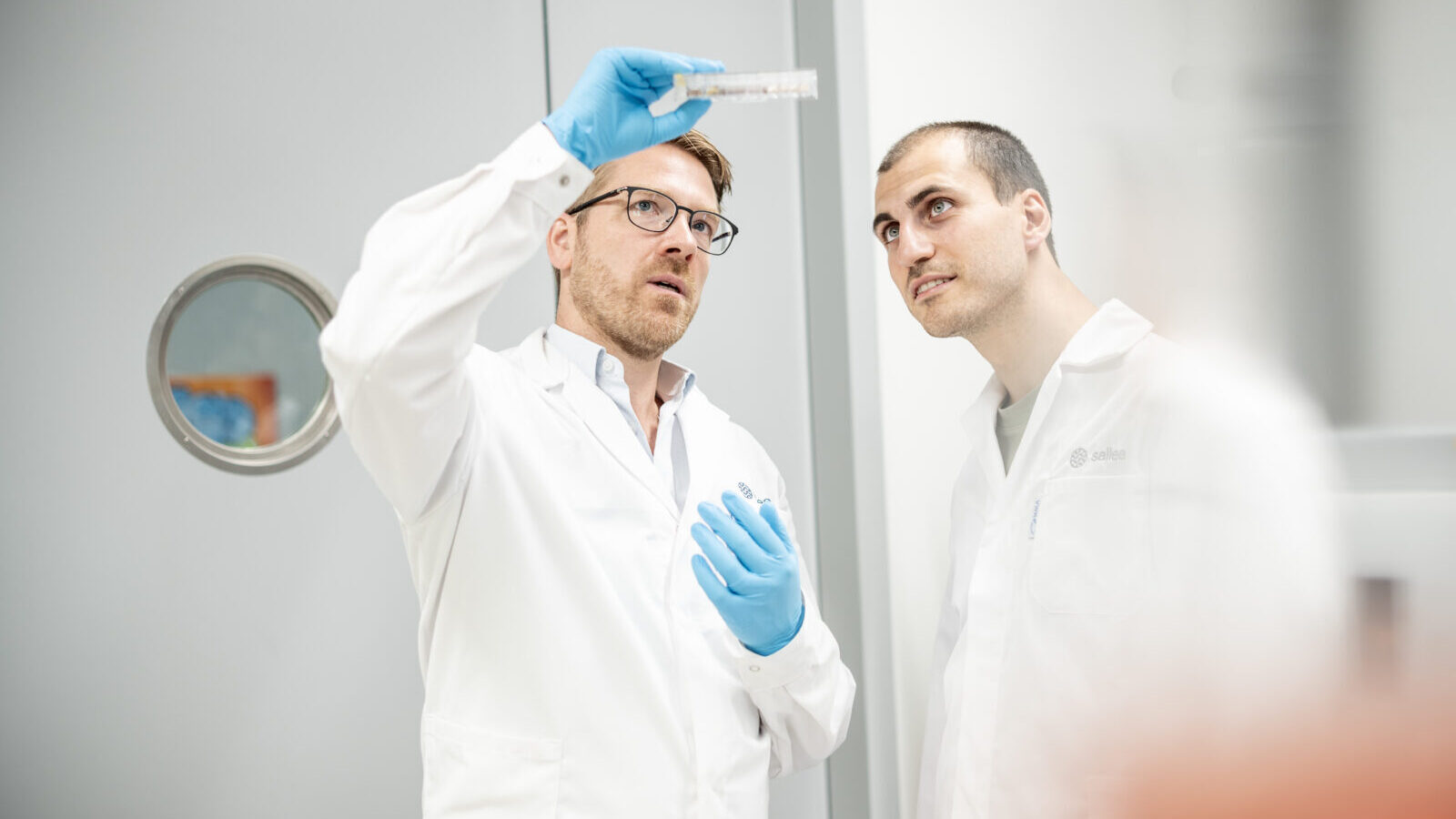
Anna Bünter: Over the next few months, we will continue to expand our pilot projects, optimize our production processes and bring new team members on board.
What advice would you give other founders based on your experience?
Nicole Kleger: You should be courageous and trust your own intuition - especially in areas where you are underrepresented. For us as founders, it was and is important to bring in our own point of view and not act according to traditional expectations. A strong team that complements and supports each other is also worth its weight in gold.
If you look five years into the future, where would SALLEA ideally be?
Anna Bünter: Our goal is to be one of the leading providers of scaled cultivation solutions for textured products in five years' time and to set the global standard for scaffolding.
Available sample kits
SALLEA starts in front of the ILMAC 2025 with the first official product range. Scaffold test kits for cell and material tests will be available via the website.
do you have any questions about this article?
We will be happy to help you.